
Okay, so check this out—I’ve spent way too many late nights poking around transaction logs on Solana. Whoa! My first impression was simple: everything moves crazy fast. At first I thought speed alone was the story, but then I noticed the patterns beneath the rush, the little signals that tell you whether a transaction is routine or weird. Hmm… something felt off about a few token transfers once I dug deeper. Initially I thought it was noise, but then I realized there was a repeatable fingerprint across several accounts—reused instructions, same program IDs, tiny rent-exempt balances that hinted at automated batching.
Really? Yes. The ledger can look like a high-speed freeway. Short, sharp bursts of activity. Longer chains of interactions where multiple programs handshake within a single block. My instinct said: watch the inner instructions. Actually, wait—let me rephrase that: watch both the outer transaction and the inner program calls. On one hand, the top-level transfer tells you who moved funds; on the other hand, the inner instructions reveal the choreography, the intent and sometimes the mischief. This is where explorers shine.
Wow! Solana explorers are the magnifying glass. They’re not perfect. I’m biased, but some features bug me. For instance, not every explorer surfaces inner instruction decoding the same way. You might see a token transfer, but unless the explorer decodes the program call you won’t know that an on-chain swap or a liquidity update happened behind the scenes. Also, explorers vary in UX. Some give you a clean, filterable table. Others are… clunkier. Still—the data’s the data. If you learn to read it, you can tell a lot.
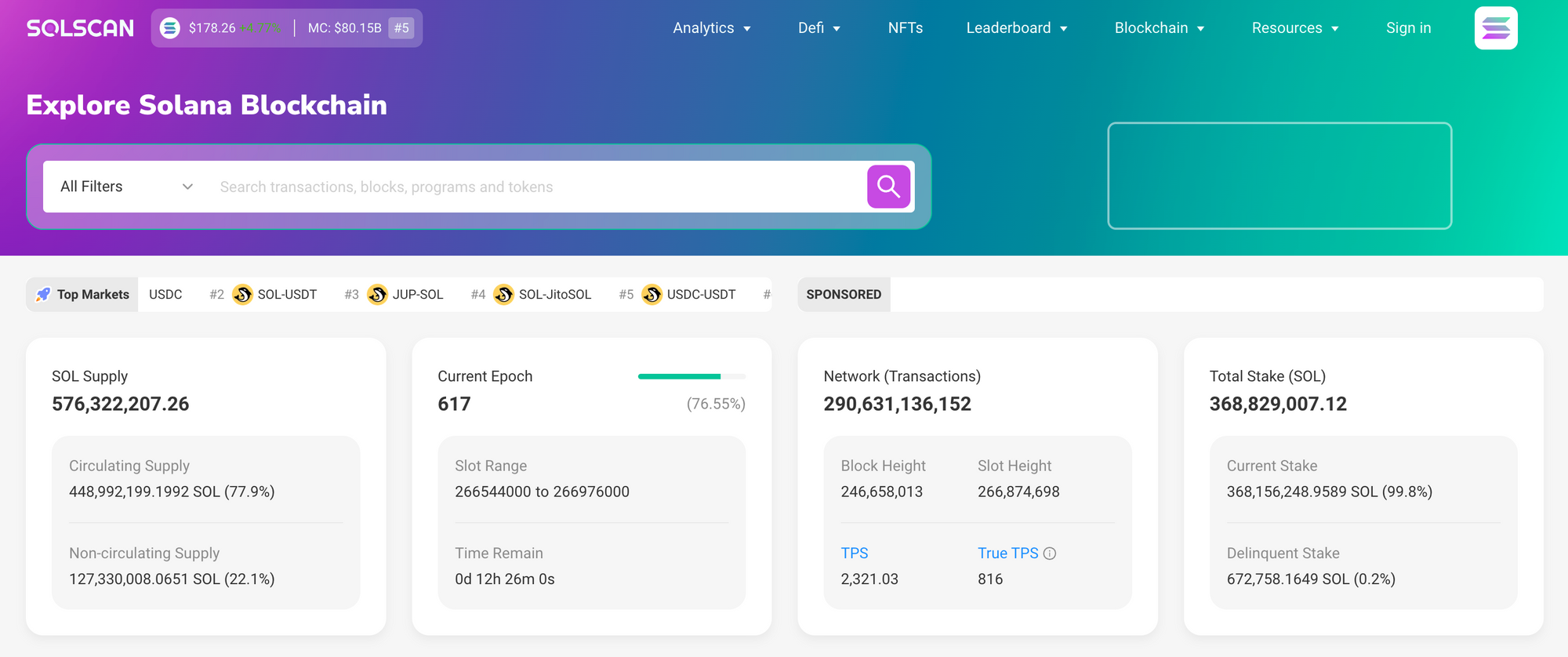
How I use solscan to untangle messy transactions
I use solscan when I want a readable trail. solscan tends to show inner instructions, program IDs, and token balances in ways that make sense to me. Here’s the thing. You open a transaction and you can: read the blockhash, see fee-payer, inspect signatures, and then drop into a decoded instruction view where swaps, memo calls, and CPI (cross-program invocations) show up. That clarity saves time. For example, if a token transfer looks suspicious, solscan often reveals whether it was part of a swap through a DEX program or a simple SPL transfer. I’m not 100% sure every edge case is covered, but it handles most practical investigations I run.
Short version: look for repeated program IDs. Medium explanation: repeated program IDs across addresses often indicate automation, bots, or coordinated activity. Longer thought: when you see the same DEX or staking program referenced by many small accounts within a tight slot window, you might be looking at front-running bots, mass airdrops, or coordinated staking churn, and it’s worth correlating those patterns with timestamped on-chain logs and external events (a new bot deployment, token launch, or even an off-chain announcement).
Whoa! Another trick: track rent-exempt balances. Small accounts with exactly rent-exempt lamports are often ephemeral—created to perform one atomic action then left dormant. If you see many such accounts interacting with the same program, it’s likely script-generated. On the other hand, long-lived accounts with recurring interactions usually belong to actual users or services.
Here’s a practical flow I use when investigating a transaction. First: identify the fee-payer and signer addresses. Second: check the token account flows. Third: open inner instructions to decode program-level calls. Fourth: cross-check with recent blocks and program logs. Sometimes I pause to look up the program ID on-chain metadata or Github. Sometimes I don’t—depends how urgent the question is. My gut feeling often gives me a lead, and then the data either confirms or refutes it.
Common red flags and what they usually mean
Short red flags are fast to spot. For example: many small transfers to the same address within seconds. Medium-level pattern: a single program ID called from different accounts with identical instruction payloads. Longer analysis: coordinated small transfers followed by a single large consolidation into one wallet usually implies automated collection (often from a token sale or multiple faucets), and while it might be benign, if the large wallet immediately dumps tokens the pattern indicates speculative behavior or potential rugging.
I’m honest—this part bugs me: explorers sometimes hide the memo or custom program data unless you dig. So you miss the narrative. But if you take the time, the transaction’s story emerges. Also, look at compute unit consumption. High compute often means heavy program logic or attempts at complex operations that could be exploited if the program isn’t well-audited. Compute spikes, in my experience, correlate with novelty—new DeFi strategies, leverage, or experimental contracts.
Really? Yep. Another nuance: timing. Transactions that cluster within a single block or two are likely automated and often profit-seeking. Transactions spread over many blocks with human-readable notes (memos) are more likely to be legitimate community activity. These are heuristics, not laws. Use them as starting points.
FAQ
How do I quickly verify a token transfer was legitimate?
Check the inner instruction decoding to see the program invoked. If it’s an SPL Token Program transfer, you’ll see a straightforward token account debit and credit. If it’s a swap, you’ll see the DEX program’s instruction names and associated token flows. Also compare timestamps and destination consolidations—patterns tell you whether it was user-initiated or automated.
Can explorers detect front-running or MEV on Solana?
Partially. You can spot suspicious ordering by analyzing slot timestamps and instruction sequences, especially when transactions closely flank a high-value swap. But full MEV detection often requires correlating mempool activity and off-chain bots, which explorers don’t always capture. Still, on-chain traces give strong hints.
Okay, last few thoughts. I’m biased toward tooling that surfaces inner details clearly—it’s my comfort zone. Oh, and by the way, practice matters. You won’t learn this from screenshots alone. Try tracing a few real transactions each week. Seriously? Yes—make it a little habit. Over time, patterns become obvious and you read transactions more like sentences than squiggles. Somethin’ about that feels satisfying.
One more thing: explorers evolve. New features appear, decoding improves, and the community builds heuristics. So stay curious and stay skeptical. This space rewards both curiosity and a healthy dose of doubt. Trail off? Maybe. But that’s the point—you never stop discovering.


