
Okay, so check this out—I’ve been poking around Solana explorers for years now. Whoa! The first time I saw a transaction log explode with program errors I felt my stomach drop. Tracking token mints, watching NFTs move, and sniffing out strange wallet behavior became my little ritual. Over time that curiosity hardened into habit, and then into a toolset I trust when things feel off.
Really? People still ask which explorer to trust. My instinct said the on-chain data is the truth, though actually reality is messier. On one hand, the raw ledger is objective and immutable. On the other hand, usability and parsing the raw data matter a lot more when you’re trying to figure out whether a token rug is happening right now.
Initially I thought all explorers were the same, just different skins on the same data. Actually, wait—let me rephrase that: they all access the same ledger, but the way they present and index that ledger changes everything for real users. Hmm… UX choices determine whether you discover a scam or miss it entirely. So I learned to value clarity over bells and whistles, which is why I keep returning to tools that surface the right signals quickly.
Here’s what bugs me about some explorers: they bury program logs. My gut said that if I can’t see recent transaction logs in one click, somethin’ is off. Slow filters or opaque labels slow down investigations. And when you’re chasing a flash exploit you don’t have minutes to click through layers—you need immediacy and context.
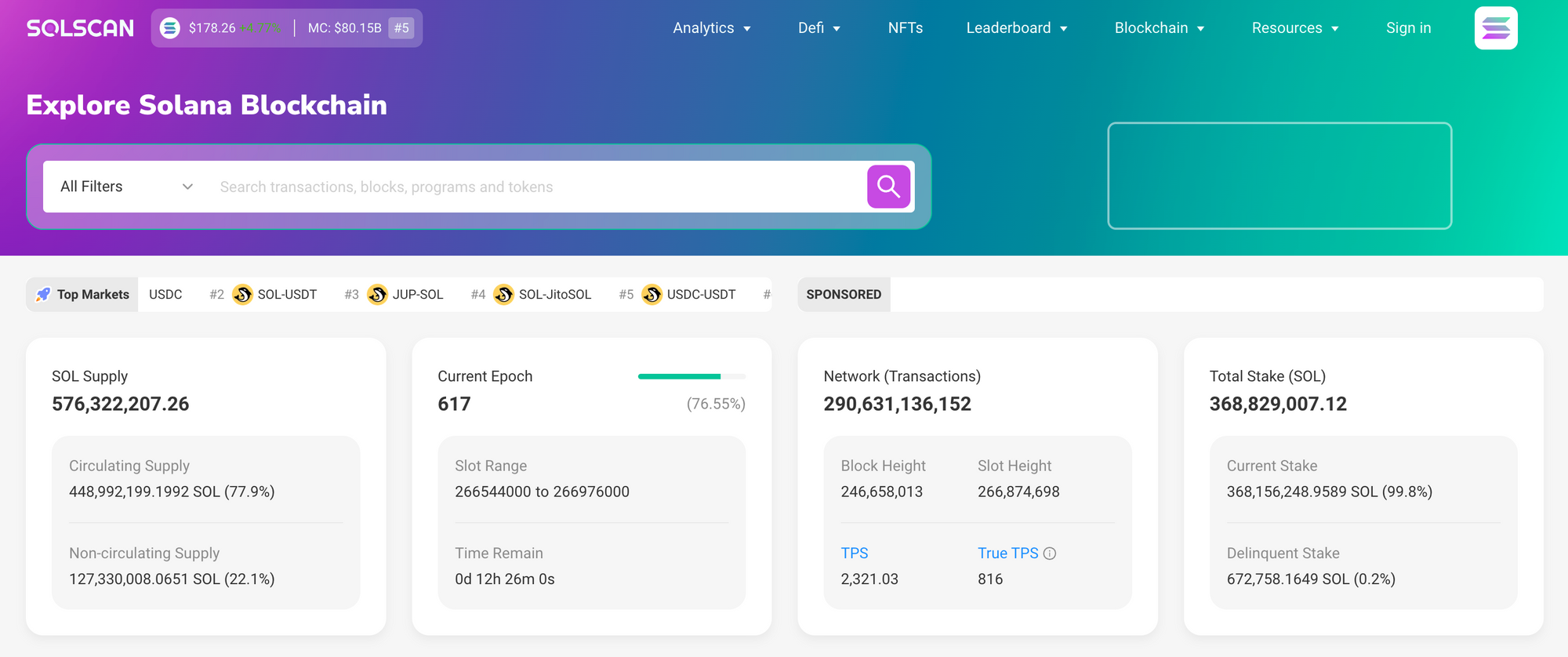
How I Use Solscan for Quick, Practical Checks
When I want the fastest read on an address or token I type it into solscan and scan the top-line info first. Short summary views give me owner, token balances, and recent transactions without drilling down. Then I go to the transaction list and look for failed or high-fee transactions, because those often tell a story. Finally I open program logs when something smells wrong, since they surface errors and instruction traces that other explorers sometimes hide.
Seriously? The program logs are a goldmine. Medium-level steps like reading the parsed instructions help reveal what a contract actually did. Long, complex thoughts about token mechanics—how spl-token transfer hooks pair with custom programs, or how an upgradable program authority can be switched during a governance event—are easier to parse with the right log context visible in plain sight. If you can see stack traces and input data, you can often tell whether a wallet was tricked or a contract misbehaved.
Pro tip: check the block time and cluster health when something looks odd. Network congestion can create backlogs that mimic weird behavior. Don’t jump to conclusions if confirmations are delayed or transactions pile up—sometimes it’s just a spike. But other times, simultaneous malformed transactions across many addresses mean a coordinated exploit or a bad client release.
One thing I learned the hard way: labels and heuristics are helpful but not perfect. Watch the token holder distribution and look for sudden spikes in transfers from unknown wallets. Double-check token metadata against mint activity. And yes, sometimes token metadata is outright wrong or maliciously crafted, so trust but verify—very very important in practice.
On the topic of security: I use explorers for provenance checks all the time. If a collectible claims a certain mint history, the ledger shows the mint tx and signature. That signature is the anchor. You can trace backwards through parent transactions to find intermediary bridges or custodial transfers. It sounds straightforward, and for the most part it is, though occasionally you hit fragmentation across wrapped tokens and cross-chain bridges, which complicates the trail.
Whoa! Wallet analysis can be surprisingly revealing. Medium-term patterns such as repeated fee spikes or identical instruction sets across many addresses point to automation or bots. Forensically, those patterns are signals you can act on: blocklists, monitoring rules, or simple alerts when a seed of malicious behavior repeats. Longer investigative threads require stitching together program logs, token flows, and holder metadata into a narrative that explains intent.
I’m biased, but I prefer explorers that let me export CSVs and that surface raw logs quickly. (oh, and by the way…) Sometimes I just want to dump recent transactions into a spreadsheet and spotlight anomalies. That imperfect approach works when you need to triage many wallets at once, and it’s surprisingly effective when you pair it with a few pivot tables.
For developers, solana explorers are also essential when debugging deployments. If your program fails during init, the explorer’s logs will point to the instruction that blew up. You save countless hours by seeing whether the error stems from an account not being rent-exempt, a mis-sized instruction, or a missing signer. Initially I would spam RPC calls and guess; now I look at logs first and guess less.
My instinct still tells me to cross-check data with on-chain sources. On one hand an explorer is a UI abstraction, but on the other hand it’s also an indexer that caches and interprets data. So when something feels inconsistent, hit the RPC or a trusted node directly. That three-step habit—UI read, log inspect, direct RPC confirmation—keeps me from chasing false positives.
There are limits though. Not every anomaly is malicious. Chain reorgs, wallet recoveries, custodial rotations, and meta-transactions all create noise. I’m not 100% sure on every pattern, and that’s okay—being honest about uncertainty reduces false alarms. Sometimes you just need to reach out to the project or community and ask. Human context matters.
Okay, so to wrap up my thoughts without wrapping up (you know how I am), use an explorer that gives clear logs, searchable transactions, and accessible token metadata. Keep a reflex to check block health and RPC state when things look weird. And don’t forget to export and analyze when investigations grow beyond casual curiosity… somethin’ as small as a malformed instruction can cascade if you ignore it.
FAQ
How is Solscan different from the native explorer?
Solscan focuses on usability and indexing, offering parsed logs and token analytics that many users find easier to scan quickly. The native explorer is authoritative but sometimes more minimal. Use both when you need cross-confirmation.
Can I rely on explorer labels to identify scams?
Labels help but they are not foolproof. Treat labels as hints and inspect the raw transactions and program logs to confirm. If something’s flagged, dig deeper—trust the ledger, not the label.


